Hon Hai Research Institute Shines at QIP 2026: Three Cutting-Edge Quantum Computing Achievements Successfully Presented
Hon Hai Research Institute Shines at QIP 2026: Three Cutting-Edge Quantum Computing Achievements Successfully Presented
Post Date
February 1, 2026
Centers
Topic
At the 29th Conference on Quantum Information Processing (QIP 2026) — the most prestigious international academic gathering in the field — the Quantum Computing Research Center of the Hon Hai Research Institute saw three heavyweight papers selected for presentation. Successfully presented in late January, these works demonstrate the depth of Hon Hai’s R&D capabilities in quantum technology to the global academic community.
💡 Three Core Breakthroughs: From Theory to Fault-Tolerance
The selected research spans quantum communication, error-correcting codes, and fundamental quantum physics, reflecting the comprehensive nature of the Institute’s quantum hardware and software strategy:
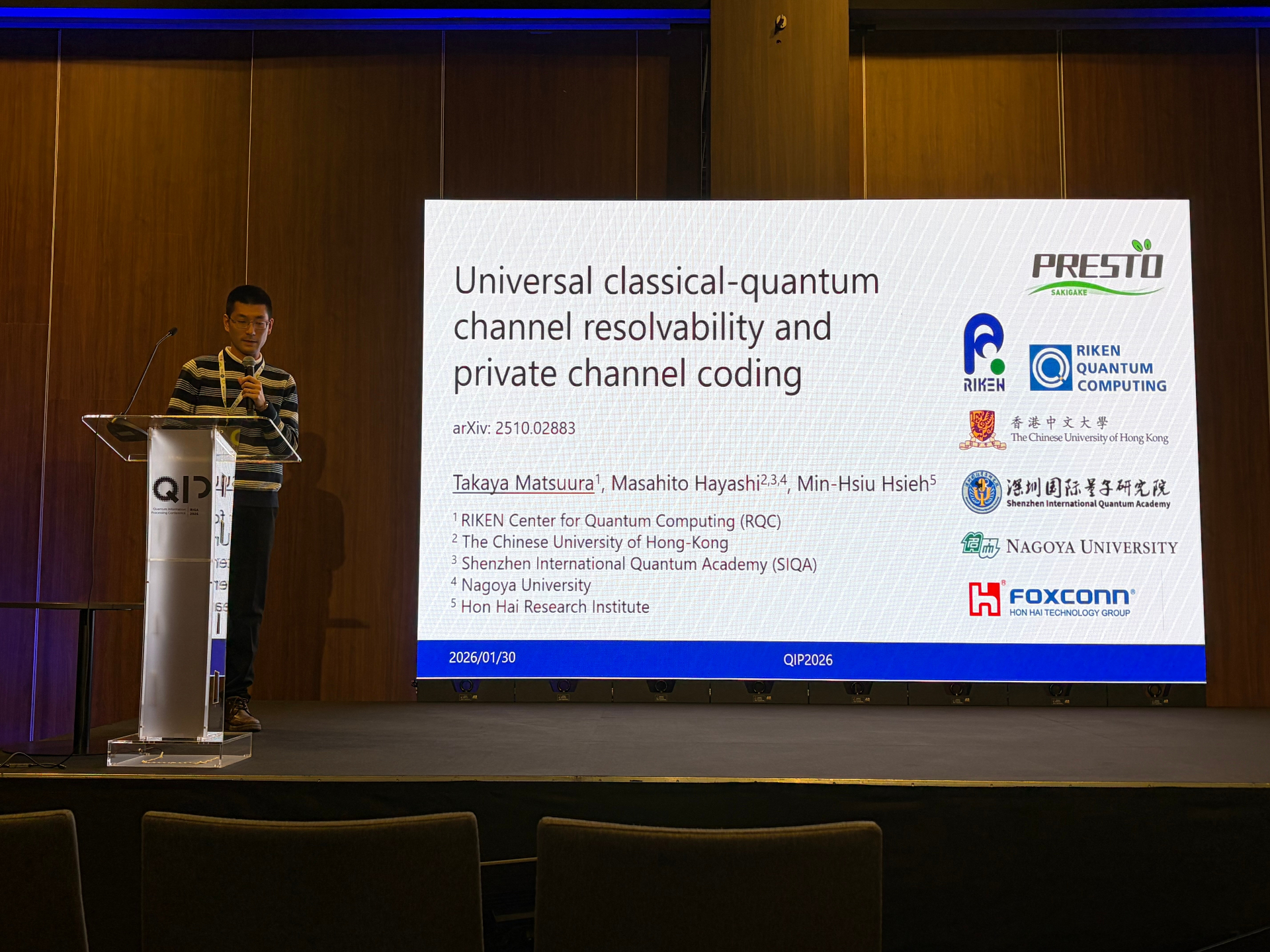
Breakthroughs in Quantum Private Communication Encoding Led by Director Min-Hsiu Hsieh, in collaboration with RIKEN (Japan) and Nagoya University, the team developed an innovative encoding scheme for "General Classical-Quantum Channels." A key theoretical advantage of this scheme is that it does not require prior knowledge of the specific channel description. This research provides critical theoretical support for building future high-bandwidth, high-security quantum private communication networks.
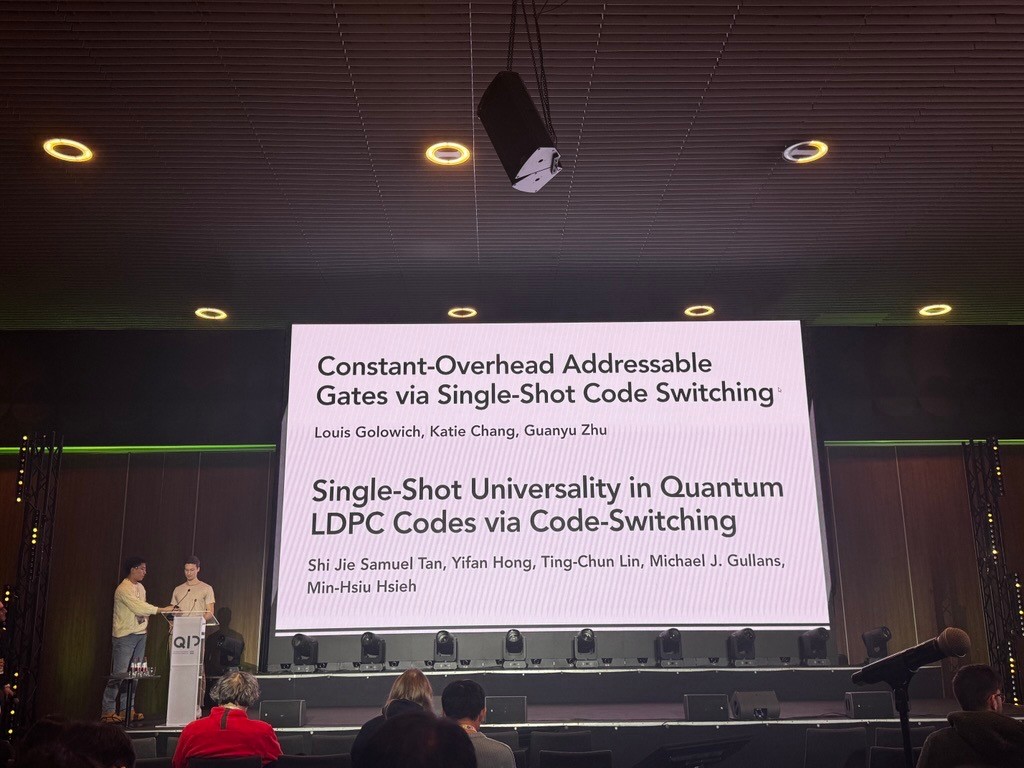
A Key Step Toward "Fault-Tolerant Quantum Computing" Quantum Computing Research Center interns Ding-Jun Lin and Samuel Tan, along with Director Min-Hsiu Hsieh and researchers from the University of Maryland, proposed a breakthrough Code-Switching technique for quantum error correction. This technology enables the implementation of universal quantum logic gates at a lower cost, marking a significant milestone in the development of large-scale, low-error-rate quantum computers.
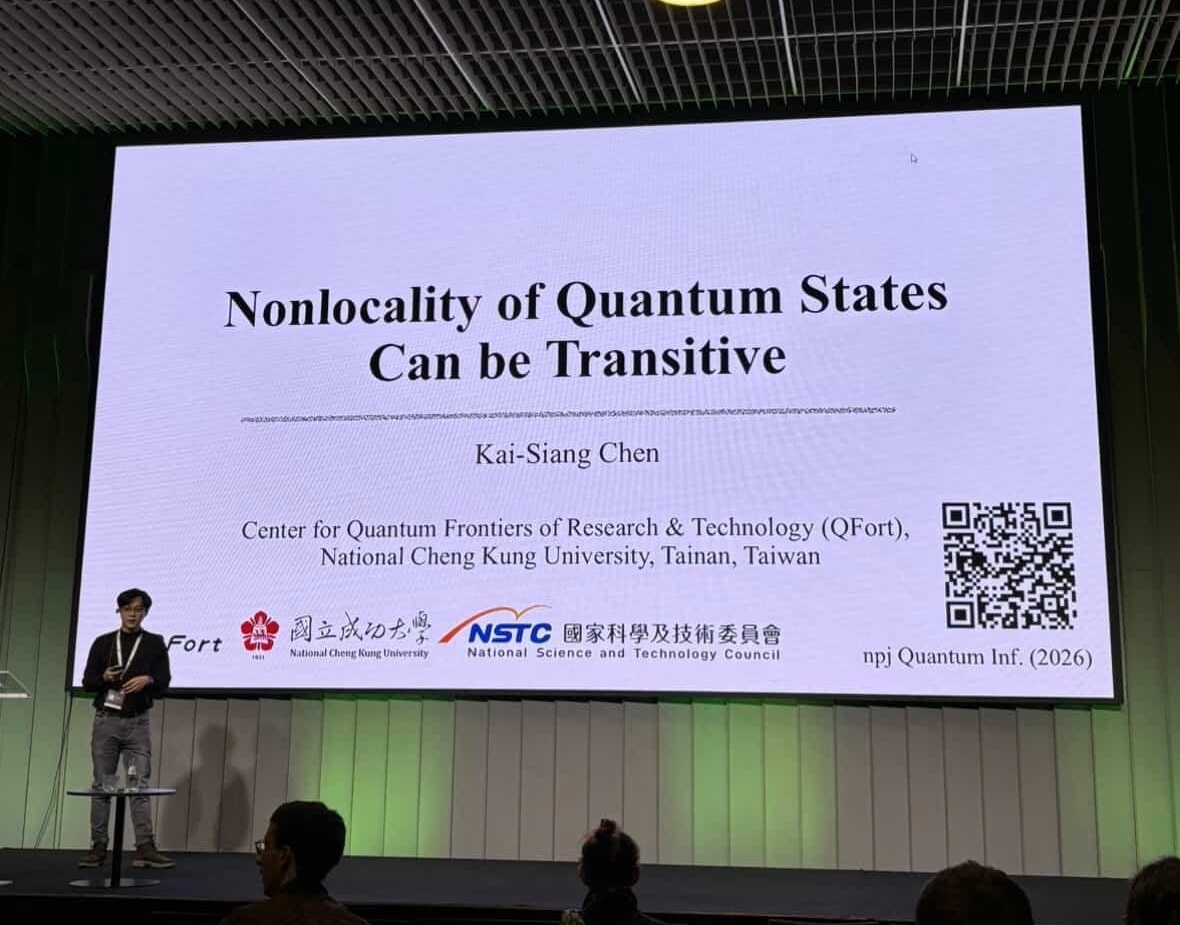
Fundamental Theoretical Contributions to Quantum Nonlocality Researcher Gelo Noel M. Tabia, in collaboration with National Cheng Kung University and the Perimeter Institute (Canada), led a team that proved for the first time the "Transitivity of Nonlocality." This discovery resolves a long-standing mystery in the physics community and has profound implications for the construction of complex future quantum networks.
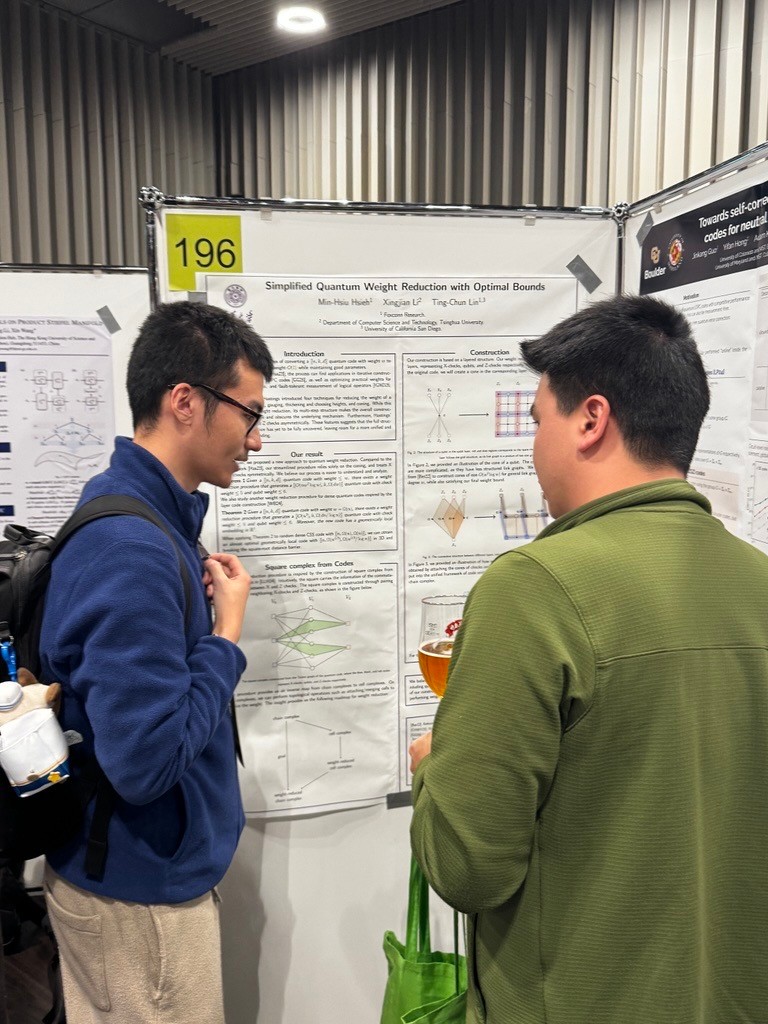

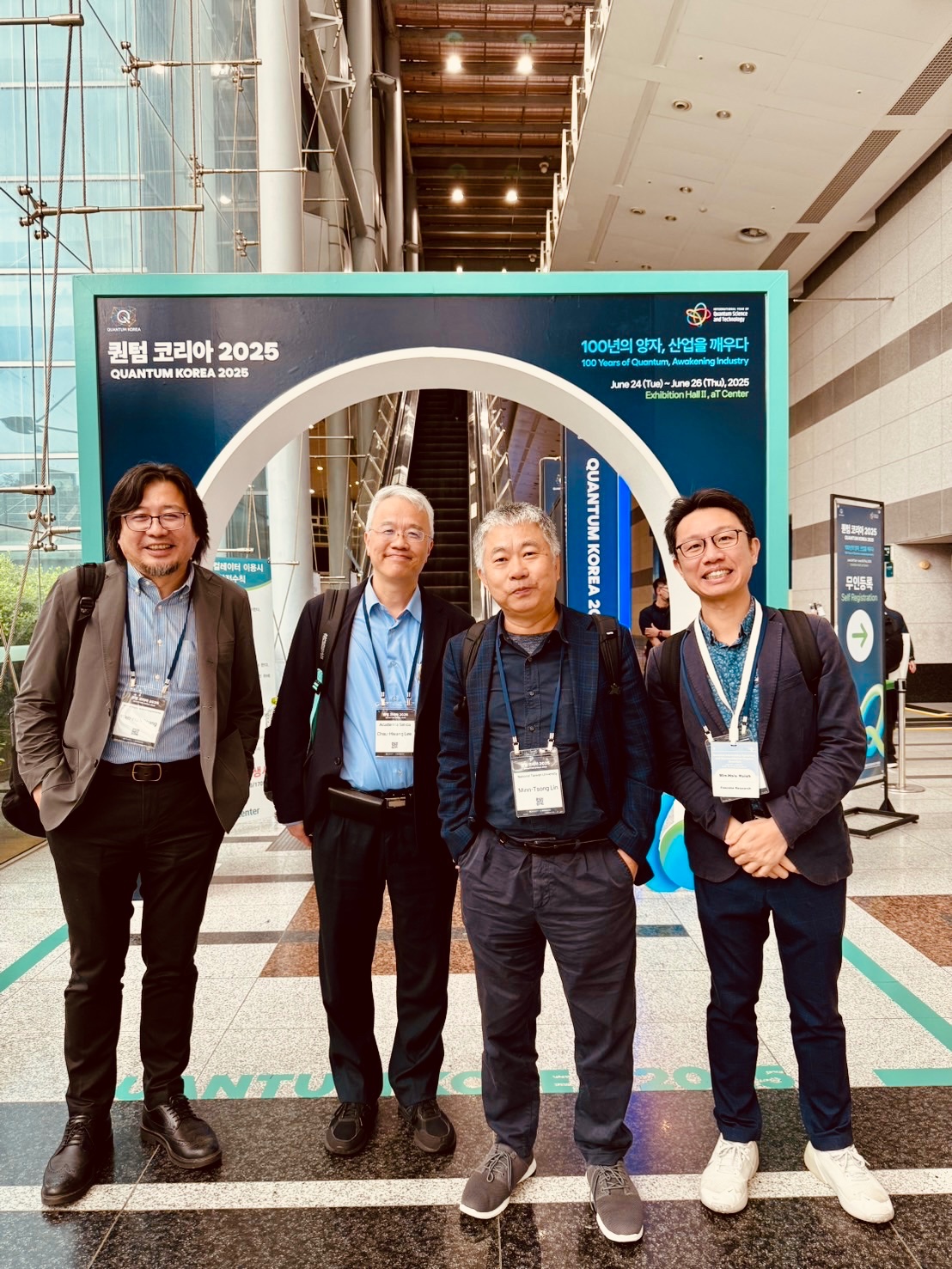
Director Min-Hsiu Hsieh Attends Quantum Korea 2025 with Taiwan Delegation, Showcasing Taiwan’s Quantum Strength
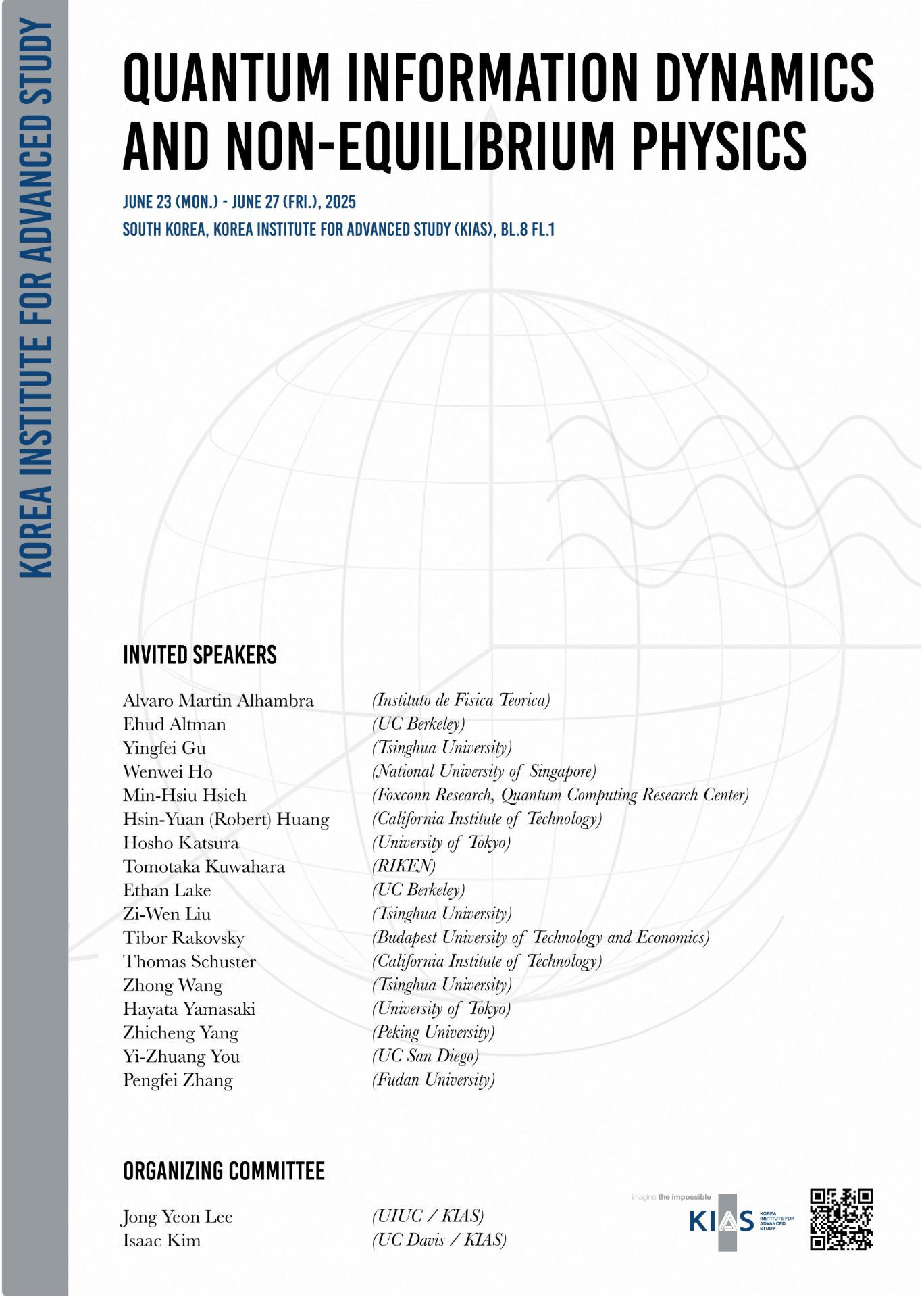
Director Hsieh was invited to attend the international academic conference Quantum Information Dynamics and Non-Equilibrium Physics 2025, held at KIAS (Korea Institute for Advanced Study) in Seoul.
Hon Hai Research Institute Director Invited to IEEE SiPS 2025 Technical Program Committee