Quantum Computing Research Center got 3 papers accepted in QIP 2026.
Quantum Computing Research Center got 3 papers accepted in QIP 2026.
Post Date
November 10, 2025
Centers
Topic

The Quantum Computing Research Center is proud to announce that three of our pioneering papers have been selected for presentation at the 2026 Conference on Quantum Information Processing (QIP 2026)! QIP is recognized as the most prestigious and competitive top-tier academic conference in the global field of quantum computing and quantum information. We are thrilled to share this news with everyone!
The three selected papers cover core areas such as Quantum Communication, Quantum Error Correction, and Quantum Nonlocality, demonstrating Hon Hai’s comprehensive strategy in key software and hardware technologies for quantum computing:
1. Universal classical-quantum channel resolvability and private channel coding
Co-authored by Researcher Takaya Matsuura (RIKEN, Japan), Professor Masahito Hayashi (Nagoya University), and Director Min-Hsiu Hsieh. This paper delves into the limits of information transmission in quantum communication. It proposes universal resolvability and private channel coding schemes for classical-quantum channels, laying a solid theoretical foundation for future secure quantum communication networks.
2. Single-Shot Universality in Quantum LDPC Codes via Code-Switching
This paper is a collaboration between Ting-Chun Lin (a UCSD student and intern at the Institute), Director Min-Hsiu Hsieh, and researchers Shi Jie Samuel Tan, Yifan Hong, and Michael J. Gullans from the University of Maryland. Focusing on the highly promising Quantum LDPC Codes, the study proposes using "Code-Switching" techniques to achieve Single-Shot universal quantum logic gates. This breakthrough technology is expected to significantly reduce the cost of quantum error correction and marks a key step toward realizing Fault-Tolerant Quantum Computers.
3. Nonlocality of Quantum States can be Transitive
Co-authored by Institute Researcher Gelo Noel M. Tabia in collaboration with National Cheng Kung University, the Barcelona Institute of Science and Technology (BIST), and the Perimeter Institute for Theoretical Physics (Canada), this study resolves an open problem in the fundamental theory of quantum physics. The team demonstrated, for the first time at the quantum state level, the "transitivity of nonlocality." This implies that in a specific tripartite system, if two pairs of subsystems exhibit nonlocality, the third pair is forced to exhibit nonlocality as well. This discovery not only deepens our understanding of quantum entanglement and nonlocality but also provides a new theoretical basis for constructing more complex quantum networks.
The Hon Hai Quantum Computing Research Institute remains committed to collaborating with the world's top minds to achieve continuous breakthroughs in the fields of quantum algorithms, communication, and error correction. We are not just conducting research; we are leading the next generation of the computing revolution!
For more information, please visit:
QIP2026:
https://qip2026.lu.lv/
Paper Links:
https://arxiv.org/abs/2510.02883
https://arxiv.org/abs/2510.08552
https://arxiv.org/abs/2412.10505
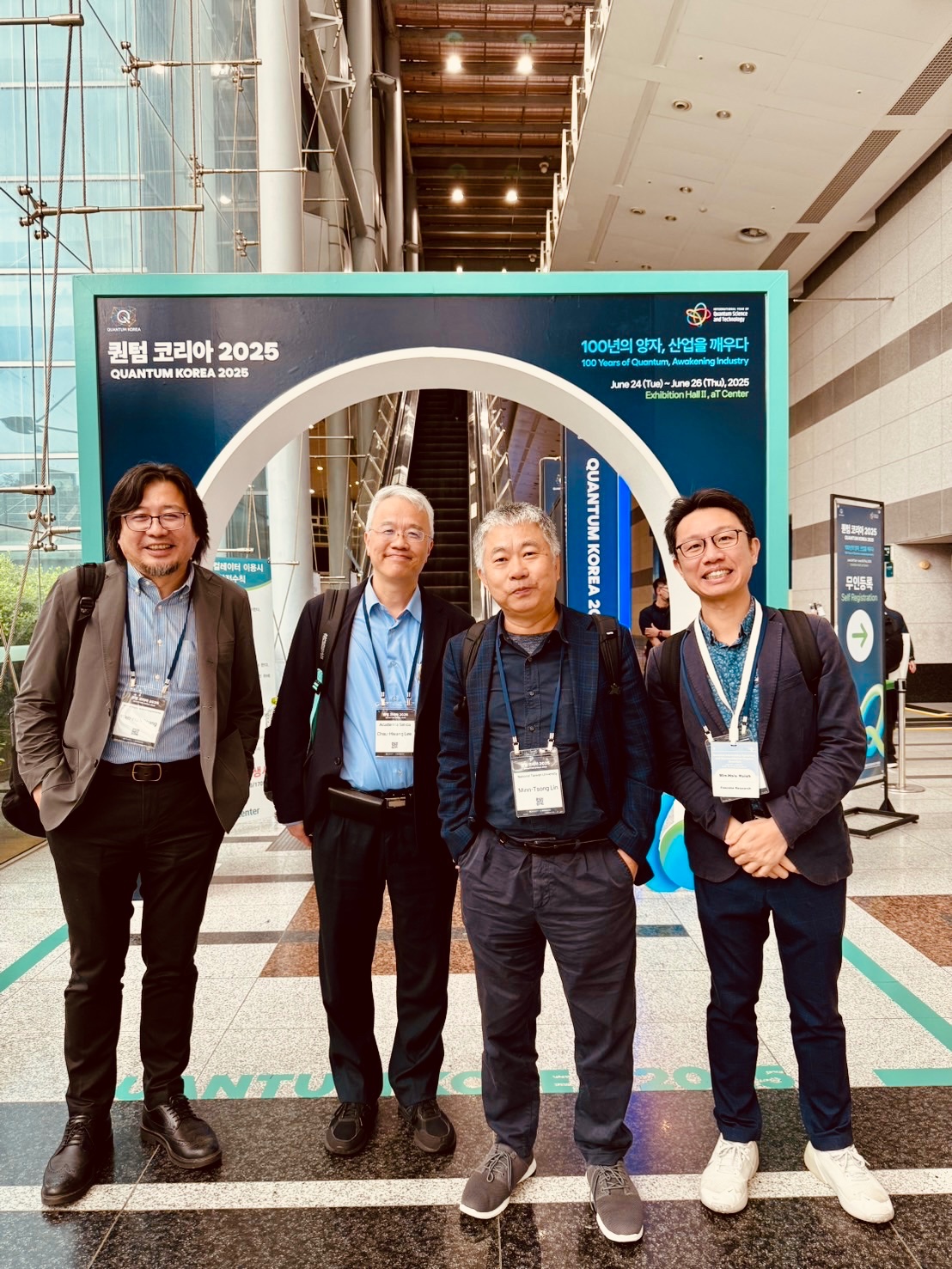
Director Min-Hsiu Hsieh Attends Quantum Korea 2025 with Taiwan Delegation, Showcasing Taiwan’s Quantum Strength
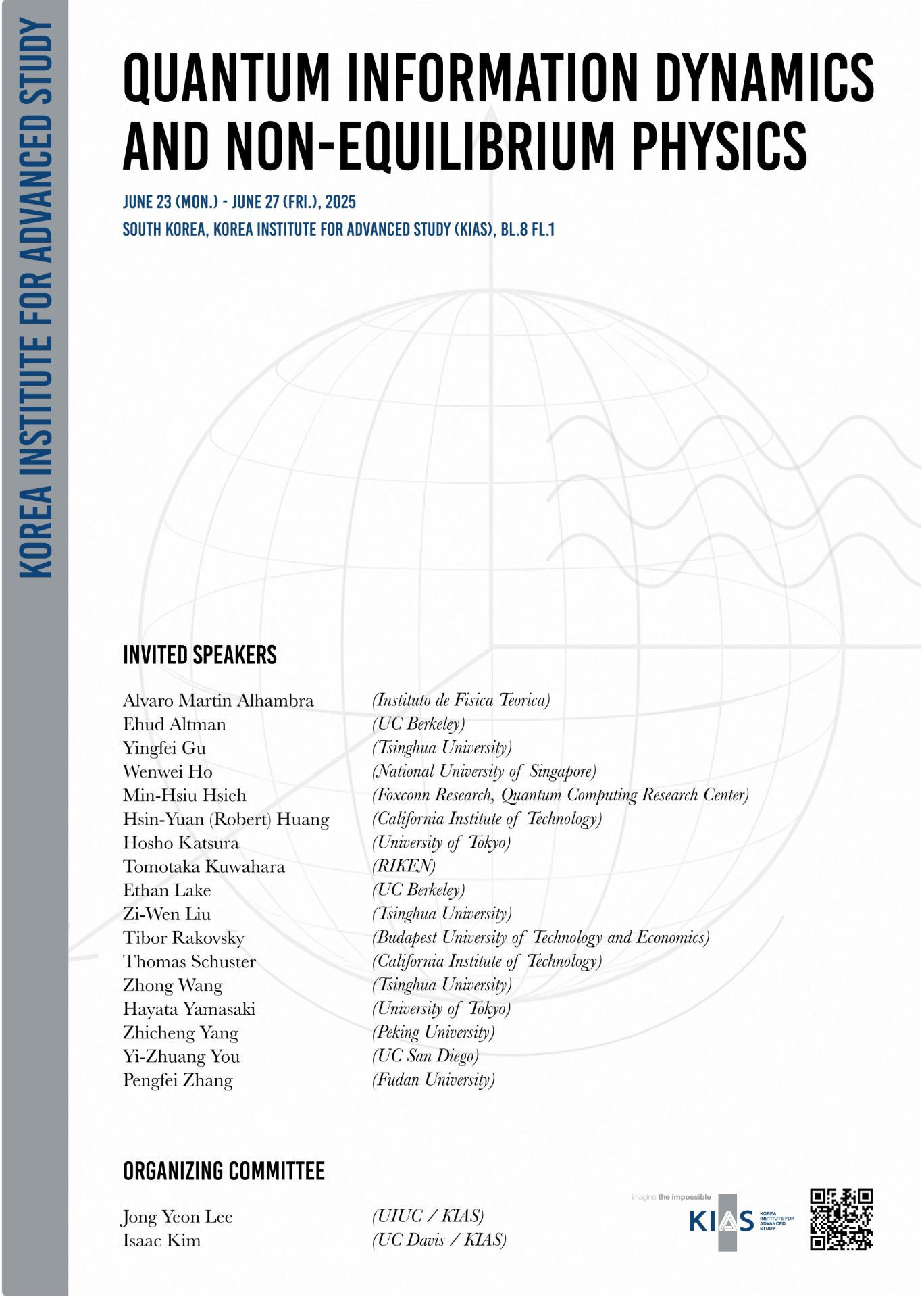
Director Hsieh was invited to attend the international academic conference Quantum Information Dynamics and Non-Equilibrium Physics 2025, held at KIAS (Korea Institute for Advanced Study) in Seoul.
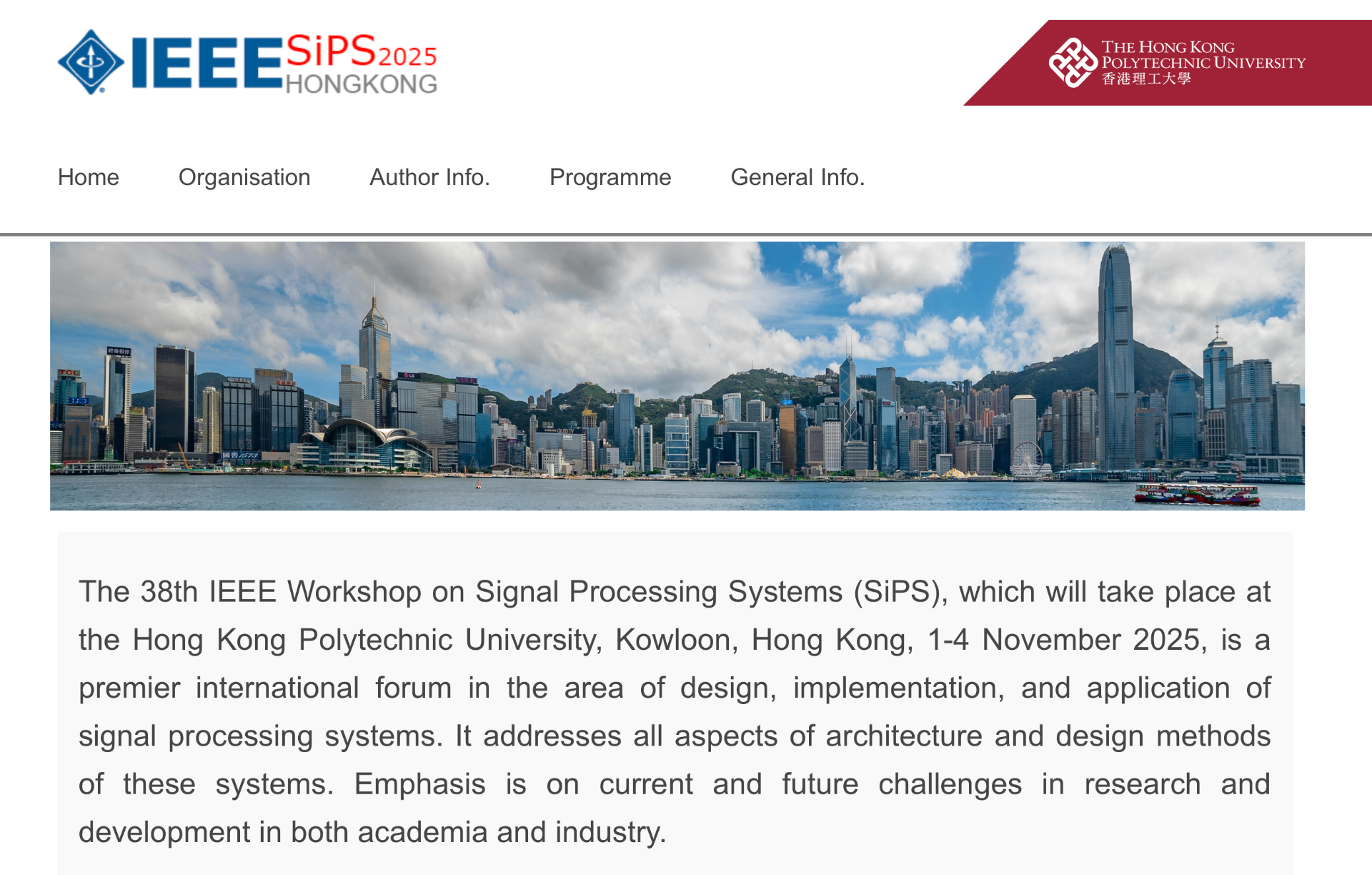
Hon Hai Research Institute Director Invited to IEEE SiPS 2025 Technical Program Committee